Archive for the ‘Synthpop’ Category

If you had the opportunity to play DJ for a night, wouldn’t you take it? That’s exactly what I did for my birthday this weekend. Decided to rent out a local club for a couple of hours and invited friends to dance the night away before opening to the public. The challenge? The playlist had to be limited to two hours. Fortunately, the DJ gave me a bonus hour, as long as I didn’t play any later-in-the-night favorites. So, for hour three, I had to reel it in a bit but still managed to throw in some favorites while trying to appeal to the masses. The music covered many genres and spanned a few decades but, of course, the bulk of the songs were from the ‘80s.

I started off the night with something relaxing and danceable and then moved into some minimal wave favorites. This was followed by some early ‘80s post-punk, gothy material that flowed into new wave and synthpop. Even managed to slip in some LCD Soundsystem without a hitch. The last part of hour two was a mixed bag of glam rock, indie, and punk. Hour three was filled with ‘80s new wave staples, jangle pop, and some indie classics. All in all, tried to get in a little something for everyone. The dance floor moved all night and there is nothing like hearing your favorite songs on the big speakers. Might have to make this an annual event.

Pretending to work the decks.

Playing DJ v2

Here’s the complete playlist:

Torch – Soft Cell (1982)
The Last Song – Trisomie 21 (1986)
Watching Trees  – Eleven Pond (1986)
Romantic Me – Polyrock (1980)
Disorder – Joy Division (1979)
Primary – The Cure (1981)
Last Year’s Wife – Zero Le Creche (1984)
A Day Without Me – U2 (1980)
Everywhere I Go – The Call (1986)
Ahead – Wire (1987)
Nowhere Girl – B-Movie (1982)
The Damned Don’t Cry – Visage (1982)
I Die: You Die – Gary Numan (1980)
Messages – OMD (1980)
Up All Night – Boomtown Rats (1981)
Lawnchairs – Our Daughter’s Wedding (1980)
I Can Change – LCD Soundsystem (2010)
Dreaming of Me – Depeche Mode (1981)
Angst In My Pants – Sparks (1982)
Sexcrime (Nineteen Eighty-Four) – Eurythmics (1984)
Why? – Bronski Beat (1984)
The Cutter – Echo & the Bunnymen (1983)
Glamorous Glue – Morrissey (1992)
The Jean Genie – David Bowie (1972)
Candy – Iggy Pop (1990)
Dreaming – Blondie (1979)
Janie Jones – The Clash (1977)
Anything Anything – Dramarama (1985)
Sheena Is a Punk Rocker – The Ramones (1977)
Last Caress – The Misfits (1978)
Eighties – Killing Joke (1984)
Mandinka – Sinead O’Connor (1987)
Wishing (If I Had A Photograph Of You) – Flock of Seagulls (1982)
To Look at You – INXS (1982)
The Ghost In You – Psychedelic Furs (1984)
Blue Savannah – Erasure (1989)
Rattlesnakes – Lloyd Cole & the Commotions (1984)
Love Is the Law – Suburbs (1984)
Crash – Primitives (1988)
Chamber of Hellos – Wire Train (1983)
She Bangs the Drums – Stone Roses (1989)
Ceremony – New Order (1981)
Inside Out – The Mighty Lemon Drops (1988)
A Million Miles Away – The Plimsouls (1983)
We Are Not Alone – Karla DeVito – (1985)
Masquerade – Berlin (1983)
Mad World – Tears for Fears (1983)

Not many recording groups can say they played live only a handful of times in their whole existence, but System 56 was one of those bands. They were referred to as the Howard Hughes of bands, since they only performed live five times. I came across the band only recently, as I continue on my never-ending quest for obscure new wave bands. I was really surprised to discover that they are American, as they have a sound very similar to early ‘80s new wave bands from the UK. Hailing from Cleveland, Ohio, they were another band that had an all-too early demise. Fortunately, in their short career, they released some pretty great songs.

Founded by guitarist and lead vocalist Steve Simenic in 1981, the group was often compared to Ultravox. This was primarily due to their ability to create a seamless mix of synth and guitar-driven music. As for the lack of live performances, this was mainly caused by a revolving-door of band members over their three-year run. It seems when new material was released, internal conflict arose and members left. At one point the band was down to two members. Nevertheless, local radio stations, especially college radio, gave the band generous airplay. In all, the band released three singles and one 6-song EP, 1982’s Beyond the Parade. In 2003, a compilation of the group’s music was released, Retrospective: 1982-1984, which contains some previously unreleased material.

The song Metro-Metro was the first single released by the band. It was recorded within a month of the group’s formation. It’s a synth-dominated track with a driving rhythm and signature guitar work. Every time I put this song on a playlist, someone rarely fails to ask “who is this?”


In 1983, the band released the single “Life on a Cool Curve.” It perfectly showcases the band’s adeptness at merging synth and guitar. They would go on to release one more single in 1984. Later that year, they disbanded.


I was a fan of Tears for Fears from the beginning but much like OMD, it wasn’t until years later that I truly came to appreciate their music. Although Songs from the Big Chair was their breakout album, it’s 1983’s The Hurting that finds the most play on my IPod. “Mad World” was the third single released from The Hurting, and it was also the band’s first video. The song was originally intended as a b-side and became the group’s first UK hit, reaching #3 on the singles chart. With its driving percussion and playful use of synth (belying the dark lyrics), it was a standout on the LP.

Roland Orzabal wrote the song. Not happy with how he sounded on vocals, he handed singing duties over to Curt Smith. The video was filmed on a country estate in Bath, England and the party scene is made up of family and friends – that’s Smiths’ mom as the birthday girl. About that funny dance, Orzabal made it up while recording the song in the studio. Having been relegated to the sidelines, with Smith on vocals, the record company insisted that he perform it in the video. I think it’s a nice touch.


I wasn’t a fan of Devo’s in the early ’80s, probably because my older brother would play “Whip It” nonstop. It wasn’t until seeing the video for “Beautiful World” years later that things changed. I’ve since gone back and listened to their early catalog and count them among one of my favorite bands of the ‘80s. Released in 1980, Freedom of Choice was the band’s third and most successful album, reaching #22 on Billboard’s pop album chart. The album is made up of short, polished synth-infused songs. The 12 tracks clock in at just over 32 minutes. Although “Whip It” put the group on the map, I prefer the lesser-known songs off the LP like the electro “Snowball” and “That’s Pep!,” which sounds kind of like a new wave Hand Jive. In my opinion, the album is one of their best and ranks behind only 1978’s Q: Are We Not Men? A: We Are Devo!.

The video for the title track has the group dressed as aliens singing about how ultimately freedom of choice is not what we want. It also has skateboarders, donuts, and Mark Mothersbaugh in a dog costume.


“Girl U Want” has the band performing in front of an audience of 1950s teenyboppers. Just as the video for “Freedom of Choice,” it’s quite a low budget affair and relies heavily on color saturation. I’m pretty sure they used up all their video production money on the video for “Whip It.”


As I was looking for cold wave bands of the ‘80s on YouTube, I came across the video for Polyrock’s “Romantic Me.” I gave it a listen and immediately recognized the song, although I couldn’t quite place where I had heard it – probably some early ‘80s new wave cable show. I’m not sure why they were lumped in with cold wave on this particular YouTube channel, as they are more minimal new wave. There wasn’t much information available on the band but I’m sure glad I rediscovered them.

Having come out of the same late ‘70s, NYC music scene, Polyrock was often compared to the Talking Heads. It also didn’t hurt that singer Billy Robertson had a unique vocal delivery, somewhat similar to David Byrne’s. Their sound combined stripped down repetitious rhythms and synth that you could move to, as evidenced on “Romantic Me,” the group’s most notable song. Their minimalist sound was no accident, as composer Philip Glass had a hand in producing their first two albums, and also made an appearance on both. The band released two albums in the early ’80s, their self-titled debut in 1980 and Changing Hearts in 1981. They also released a 5-track EP in 1982, Above the Fruited Plain, before calling it quits later that year.

“Romantic Me” is the first track off the self-titled LP. The repetitious beat along with the mechanical keyboards and synth play nicely against Robertson’s emotional delivery.


For “Call of the Wild,” backing vocalist Catherine Oblasney takes the lead. The song is included on the EP Above the Fruited Plain. By this time, the group had already moved to a more pop-oriented, melodic sound.


Ah, the New Romantics – the big hair, the makeup, the frilly clothes – and that was just the men. With my love of new wave music, I’m not sure why it took me so long to stumble upon the Blitz Kids, who originated the New Romantic movement. Those familiar with the Blitz Kids know how influential they were in this movement, and ‘80s culture in general. It was while researching the New Romantics that I became acquainted with this group of musicians, art students, and “unruly” teens who were so instrumental in shaping what ended up being the most dominant genre of music and fashion in the early ‘80s. Members of this prestigious set included Boy George, Marilyn, Steve Strange, members of Bananarama, and John Galliano, just to name a few.

Origins and Fashion

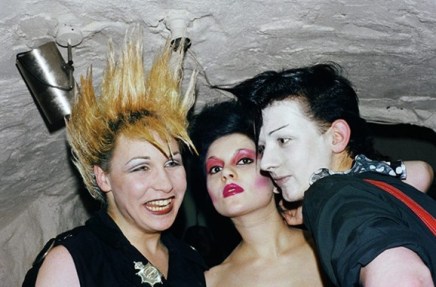
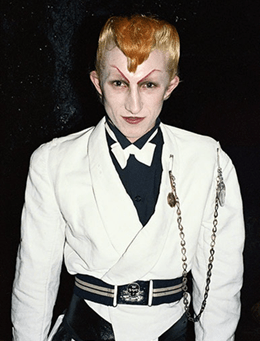
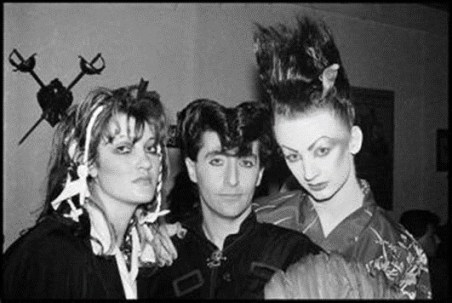
It all started in 1978 in London, where a club called Billy’s held regular Bowie nights. The themed night drew kids disillusioned with the punk scene, and art and fashion students from local colleges. After a few months the group moved on to the Blitz wine bar for regular Tuesday night gatherings. The crowds donned looks from the English Romantic period, Berlin Cabaret, to retro Hollywood, and androgyny ruled the day. The extravagant fashion was a rejection of the stripped down look of punk. Steve Strange (later of Visage) manned the door with an iron fist, and if you did not live up to his creative standards you were not getting through the door. If you were able to get in, you would get the chance to mingle with the likes of Siouxsie Sioux, Midge Ure, and Billy Idol. Below are photos that capture the fashion and attitude of those Tuesday nights.

A shot outside the Blitz

Blitz Club


Steve Strange (middle) and Boy George (right)

Steve and George


Marilyn (left), DJ Princess Julia (Julia Fodor), Boy George (right)

Marilyn and George and Julia


Martin Degville, pre- Sigue Sigue Sputnik

Martin 2

The Music

But it wasn’t all about the fashion. It all started with the music. And the music at the Blitz was described as “electro-diskow.” This consisted of European disco (think Giorgio Moroder), German bands such as Kraftwerk, glam rock bands like Roxy Music and, of course, David Bowie. A favorite dance move saw partners hold hands, lift their knees up to their waist, and spin and hop in a new kind of jive, as seen in the video for Duran Duran’s “Planet Earth” (see the 2:53 mark). Duran Duran actually recruited some of their Blitz Kid friends for the shoot. David Bowie also had some Blitz Kids appear in the video for “Ashes to Ashes.” It wasn’t long before bands started to emerge from the scene. The most notable were Spandau Ballet, who got their start playing cabaret nights at The Blitz, and Visage. The heavy synth and electropop sound would dominate the airwaves well into the decade.

Legacy and Influence

Although nights at the Blitz only lasted a couple of years, the influence of the Blitz Kids and the New Romantic movement on music, club culture, and fashion could be felt for decades to come. Designers such as Vivienne Westwood based their whole collections on the New Romantic look, and the clothes were worn by such acts as Adam and the Ants and Bow Wow Wow. Bands such as Duran Duran, Depeche Mode, Heaven 17, Human League, and ABC, who were all heavily influenced by this movement, found regular rotation on MTV and helped shape ‘80s synthpop music. Steve Strange and his group also revitalized the London nightlife and created the idea of theme nights that have become a staple of club culture to this day. Oh, to be able to have just a peek at what went on inside the Blitz during those years. On second thought, I probably would have never made it through the door.

For more on the Blitz Kids, here’s a documentary from 2005.


I look for any occasion to get a group of ‘80s music lovers together, and NYE seemed like the perfect opportunity. Since we’re both not too keen on venturing out on NYE, my husband and I decided to throw a dinner party to ring out the year. Fortunately, all attendees either grew up in the ‘80s or had a love of ‘80s music. With that kind of crowd, I couldn’t help but put together a playlist of songs from the era that included old favorites, rediscoveries, and new music I’ve come across this past year. Oh, we also attempted to play some games but the music took over and our living room became a dance floor until the wee hours of the morning.

Along with the usual suspects (Depeche Mode, Duran Duran, The Smiths, etc.), the playlist included songs from bands I had forgotten about over the years. Bands such as The Members (“Working Girl”), The Producers (“She Sheila”), Wire Train (“Chamber of Hellos”), and Felony (“The Fanatic”) found a much overdo spot on the playlist. Although sharing forgotten songs with the group was enjoyable, it was the unearthed gems I was most looking forward to playing. For a few, it was the first time hearing some of the songs and for others they brought back fond memories.

One of the bands I recently rediscovered is The Bolshoi. I knew of The Bolshoi back in the day but embarrassingly had never listened to any of their songs. My current favorite (and one I can’t seem to stop playing) is “Can You Believe It?” off their 1987 LP Lindy’s Party. It features an addictive, bouncy synth line and a heavy drum bass. I’ll definitely be seeking out more from them for a future post.


Another band discovered this past year is The Monochrome Set. From what I’ve come across they were favorites of Morrissey and Johnny Marr. This is another band that I’ll be exploring and posting about in the New Year. The song “He’s Frank” was first released as a single in 1979 and re-released as a slightly different version years later. I prefer this version, in which they sound like a cross between the Violent Femmes and The Velvet Underground. Just as above, there was no official video for the song available.


I’ve been away for a while but am looking forward to sharing more classics and overlooked songs of the ‘80s in 2016!

It’s time to post more cold war videos. As I had mentioned in a previous post on the subject, the ‘80s were filled with videos of nuclear war, nuclear bombs, and world annihilation. During the early ‘80s, the threat of war was an integral part of our lives. We saw it on TV, read about it in the papers, heard about it in songs – and there was no shortage of songs on the topic. So here are a few more videos about the dreaded destruction of the planet that poured out of our television sets at the time.

“Stand or Fall” is the first single off the The Fixx’s 1982 debut album Shuttered Room. Singer Cy Cumin wrote the song out of frustration over decisions being made by Ronnie and Margaret. The video, directed by Rupert Hine, was banned by some UK shows due to what some considered a violent depiction of a horse falling to the ground. The horse in question had been in several movies and was trained to fall on command. As luck would have it, on the day the video was shot the horse would not comply with the command to fall and was brought down by a rope. In the early days of pre-MTV Europe, most videos were shown on kids’ TV shows and this was deemed too graphic, as they felt the horse looked as if it was dying. The song charted both in the US and the UK but was particularly successful in Canada, reaching the top 40.


The video for the 1983 Men at Work song “It’s a Mistake” doesn’t ponder the question of whether or not war will take place but a matter of when and how. Meant as a parody of Stanley Kubrick’s Dr. Strangelove, the video takes place in an underground bunker as the future of the world is considered. The song was the third single from the album Cargo and reached #6 in the US but only reached #34 in their native Australia. In the video, Colin Hay portrays an officer wondering whether or not his men will be called to go to war. The video ends with Hay accidentally pushing the “button” by stubbing out a cigarette in an ashtray unfortunately placed next to the button.


Although the OMD song “Enola Gay” references the plane that dropped the atomic bomb on Hiroshima, it was meant to bring attention to the cold war of the ‘80s. The song was the only single released from the 1980 album Organisation, the group’s second album. Upon its release, “Enola Gay” received critical praise. Critic Dave Thompson called the track a “perfect synth-dance-pop extravaganza” and NME listed it as one of the best 100 songs of the ‘80s. The song also caused controversy as some who were unfamiliar with the bombing of Hiroshima thought it had a pro-homosexual meaning. As a result, the song was banned on some radio stations in the UK. Regardless, the song was a huge international success and became the group’s first top 10 UK hit.


The first weekend in December is when we host our annual holiday party. This year we decided on a theme near and dear to my heart – ‘80s new wave music (with a dash of ‘70s). So with plenty of hairspray and makeup on hand, my husband and I prepared for the night. The drinks consisted of Sex on the Beach, Kamikazes, Fuzzy Navels, and wine coolers. In the weeks leading up to the party, I went back and forth on what to play. Should the playlist be filled with popular classics or should I pull out the deep cuts? In the end, the playlist consisted of what I hope was a good balance of popular and a bit of the obscure. The dance floor was active all night; it helps to have guests who love ‘80s music. Below is the party playlist.

1. So Long – Fischer-Z (1980) 30. Kids In America – Kim Wilde (1981) 59. Everything Counts – Depeche Mode (1983)
2. Big In Japan – Alphaville (1984) 31. Lucky Number – Lene Lovich (1978) 60. Just Like Heaven – The Cure (1987)
3. Here Comes The Rain Again – Eurythmics (1984) 32. 99 Luftballons – Nena (1983) 61. Pop Muzik – M (1979)
4. Doctor! Doctor! – The Thompson Twins (1984) 33. Birds Fly (Whisper to a Scream) – Icicle Works (1983) 62. Fashion – David Bowie (1980)
5. Love My Way – The Psychedelic Furs (1982) 34. I Will Follow – U2 (1980) 63. Girls On Film – Duran Duran (1981)
6. Dance Hall Days   – Wang Chung (1984) 35. In a Big Country – Big Country (1983) 64. Politics Of Dancing – Re-Flex (1982)
7. Things Can Only Get Better – Howard Jones (1985) 36. Church Of The Poison Mind – Culture Club (1983) 65. Lips Like Sugar – Echo & The Bunnymen (1987)
8. Who Can It Be Now? – Men At Work (1981) 37. Lover Come Back (To Me) – Dead or Alive (1985) 66. Do They Know It’s Christmas? – Band Aid (1984)
9. Save It For Later – The English Beat (1982) 38. China – The Red Rockers (1983) 67. Mad World – Tears for Fears (1982)
10.  Senses Working Overtime – XTC (1982) 39. Heaven – The Psychedelic Furs (1984) 68. It’s My Life – Talk Talk (1984)
11. One Thing Leads To Another – Fixx (1983) 40. Smalltown Boy – Bronski Beat (1984) 69. The Look of Love, Pt. 1 – ABC (1982)
12. I Got You – Split Enz (1980) 41. A Little Respect- Erasure (1988) 70. The Walk – The Cure (1983)
13. Oh L’amour – Erasure (1986) 42. Just Can’t Get Enough – Depeche Mode (1981) 71. Ahead – Wire (1987)
14. Johnny and Mary – Robert Palmer (1980) 43. The Safety Dance – Men Without Hats (1983) 72. Channel Z – The B-52’s (1989)
15. She Blinded Me With Science – Thomas Dolby (1982) 44. Messages (Single Version) – OMD (1980) 73. Beautiful World- Devo (1981)
16. Der Kommissar – After the Fire (1982) 45. Peek-A-Boo – Siouxsie & The Banshees (1988) 74. Living On Video – Trans-X (1983)
17. The One Thing – INXS (1982) 46. Revenge – Ministry (1983) 75. Digital – Joy Division (1978)
18. (Keep Feeling) Fascination – The Human League (1983) 47. Lucretia My Reflection – The Sisters Of Mercy (1988) 76. Dreaming – Blondie (1979)
19. Promised You A Miracle – Simple Minds (1982) 48. Nemesis – Shriekback (1985) 77. Never Say Never – Romeo Void (1982)
20. Do You Want To Hold Me? – Bow Wow Wow (1983) 49. Obsession – Animotion (1984) 78. Age of Consent – New Order (1983)
21. Always Something There to Remind Me – Naked Eyes (1982) 50. Destination Unknown – Missing Persons (1982) 79. Electricity – OMD (1979)
22. Wishing (If I Had A Photograph Of You) – A Flock Of Seagulls (1983) 51. Tainted Love – Soft Cell (1981) 80. People Are People – Depeche Mode (1984)
23. Shout – Tears for Fears (1984) 52. Christmas Wrapping – The Waitresses (1981) 81. Planet Earth – Duran Duran (1981)
24. West End Girls – Pet Shop Boys (1986) 53. Let Me Go – Heaven 17 (1982) 82. Dancing With Tears In My Eyes – Ultravox (1984)
25. Goodbye Horses (Clerks II Remix) – Garvey (feat. Q Lazzarus) (1988) 54. How Soon Is Now? – The Smiths (1985) 83. Send Me An Angel – Real Life (1983)
26. The Dead Heart – Midnight Oil (1986) 55. Legal Tender (Album Version) – The B-52’s (1983) 84. The Promise (Studio Version) – When In Rome (1987)
27. The Cutter – Echo & The Bunnymen (1983) 56. Nowhere Girl – B-Movie (1982) 85. Space Age Love Song – A Flock Of Seagulls (1982)
28. I Die: You Die (Video Version) – Gary Numan (1980) 57. The Metro – Berlin (1982) 86. It’s A Sin – Pet Shop Boys (1987)
29. Lawnchairs – Our Daughter’s Wedding (1980) 58. Cars – Gary Numan (1979) 87. Don’t Go – Yaz (1982)


Thirty years ago today, the single “Do They Know It’s Christmas” was released. For a child of the eighties, and a British new wave music fan, it was an amazing moment in history. The biggest names on the UK music scene coming together to record one song, on one day, for Ethiopian famine relief. I recall the buzz around the release of the song and, of course, the video. I waited patiently for MTV to finally play the world premiere of the video and it didn’t disappoint. Besides being made for a good cause, the song was also catchy and embodied the spirit of new wave music at the time – plenty of drum machines and synth. Written by Bob Geldof with Midge Ure of Ultravox providing the music, it was also unlike any charity single before with intentionally dark lyrics made to grab attention.

Originally inspired by a BBC documentary on the famine plight in Ethiopia, Geldof felt compelled to do something to combat what he was witnessing. With the help of Ure, he quickly put together a plan for a charity single. (Although Geldof received most of the credit for the undertaking, it was Ure that recorded, mixed, and ensured that the actual session went smoothly). The song was recorded in one day at Sarm West Studios and released four days later. It was the biggest selling single in UK at the time and reached #1 and stayed there for five weeks. The song didn’t reach #1 in the US, only peaking at #13 on the Billboard charts.

With media in place, the artists began arriving at 9am that morning – Duran Duran, George Michael, Paul Young, Phil Collins, Spandau Ballet, members of U2, Status Quo, Ultravox, Culture Club, Heaven 17, Marilyn (although not having been invited), among several others. After noticing that Boy George was absent, Geldof had to quickly arrange for a Concorde transatlantic flight to get him from New York. In order to get all members involved, the chorus was recorded first and then Ure had to have someone volunteer to sing the body of the song. Tony Hadley of Spandau Ballet bravely took the challenge and was followed by singers that had already been assigned lyrics.

Although appearing cheery in disposition, many of the musicians arrived with hangovers and many a drug and alcohol were consumed to keep the musicians going through the all-day session. There were small feuds that were put aside – Boy George continually trying to out George Michael and rivalries amongst some of the bands. There were also some who questioned the lyrics. Bono had some concerns over the line “Tonight thank god it’s them instead of you” and was convinced by Geldof that the lyrics had to be brutal in order to be effective.

Other musicians who were not able to make it to the session but contributed to the b-side were David Bowie, Paul McCartney, members of Big Country and Holly Johnson of Frankie Goes to Hollywood. The opening lines of the song sung by Paul Young were originally intended for Bowie. Since the original recording, the song has been rerecorded several times with different musicians and for different causes, the latest the fight against Ebola, but in my opinion nothing comes close to the original.